

Description
Biological Safety Cabinet (BSC) Decontamination System
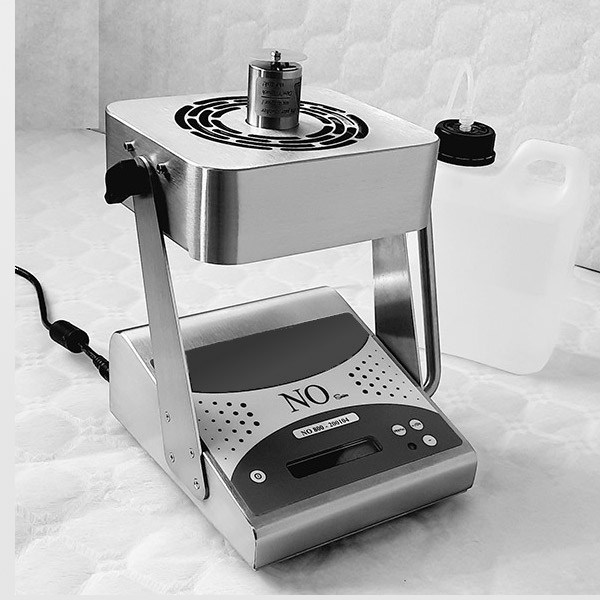
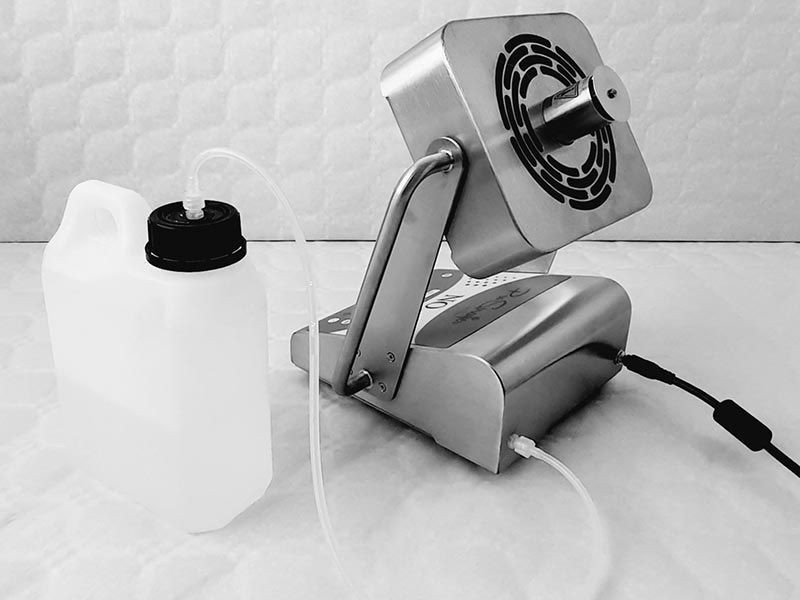
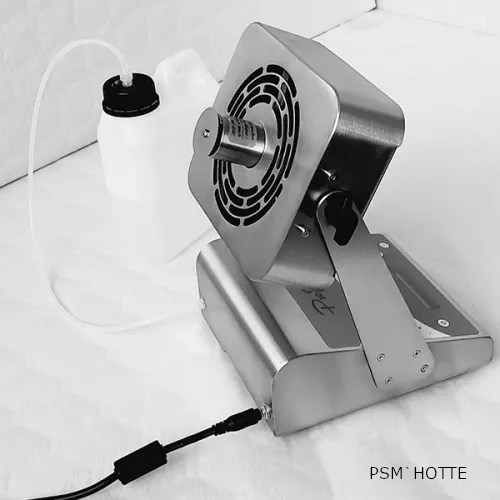
Eco-Sprayer provides compact biosafety cabinet decontamination systems designed for Biological Safety Cabinets (BSCs), laminar flow cabinets, isolators and other small laboratory enclosures. The system uses high-speed rotary disc technology to generate fine droplets and distribute a compatible disinfectant throughout the enclosed treatment volume.
Our compact laboratory decontamination equipment is particularly suitable for applications where controlled disinfectant distribution is required in small or confined spaces. Compatible formulations based on hydrogen peroxide (H₂O₂) may be used as part of a validated decontamination protocol.
When Should a Biological Safety Cabinet Be Decontaminated?
A Biological Safety Cabinet (BSC) is a ventilated laboratory enclosure designed to provide defined levels of protection for personnel, the environment and, depending on the cabinet class and configuration, the product being handled. High-efficiency filtration and controlled airflow are key elements of BSC operation.
Biosafety cabinet decontamination may be required before certain maintenance operations, filter replacement, relocation or disposal of the cabinet, following suspected or identified contamination, or when required by the laboratory’s procedures.
- Before certain maintenance or technical interventions
- Before HEPA filter replacement
- Before relocating the cabinet
- Before disposal or decommissioning
- When changing activities, where required by the laboratory protocol
- Following suspected or identified contamination
EN 12469 defines performance requirements for microbiological safety cabinets and is used in Europe through national implementations. The appropriate decontamination procedure should always take into account the cabinet manufacturer’s instructions, laboratory procedures, the biological risk and the disinfectant being used.
Our Biosafety Cabinet Decontamination Equipment

Eco-Sprayer offers professional BSC decontamination equipment specifically designed for small enclosures and laboratory applications. Its compact design makes it suitable for Biological Safety Cabinets, isolators, laminar flow cabinets and other confined laboratory volumes.
Compact Decontamination System for Small Volumes
Eco-Sprayer’s compact system is designed for small-volume decontamination, with configurations suitable for treatment volumes below approximately 40 m³ depending on the model, application and decontamination protocol.
Typical applications include biosafety cabinets, isolators, laminar flow cabinets, laboratory hoods, fume cupboards, pass-through chambers, animal facility enclosures and small laboratory rooms.
The user interface can support routine operation as well as more specific quality requirements, including profile management, cycle traceability and complete treatment cycles. Protocol data can be extracted via USB. Depending on the device configuration, the integrated DeFAN airflow management system contributes to the distribution of fine droplets within complex enclosed volumes.
Hydrogen Peroxide Biosafety Cabinet Decontamination
For compatible applications, Eco-Sprayer equipment can be used with suitable hydrogen peroxide (H₂O₂) formulations as part of a defined biosafety cabinet decontamination protocol.
The high-speed rotary disc converts the liquid disinfectant into fine droplets that are dispersed throughout the treatment volume. This technology is particularly suited to aerosolized hydrogen peroxide decontamination applications when used with an appropriate formulation and protocol.
Decontamination effectiveness depends on the complete process, including the equipment, disinfectant formulation, concentration, amount of product applied, contact time, cabinet configuration and operating protocol. The disinfectant manufacturer’s instructions and equipment compatibility requirements must therefore be followed.
High-Speed Rotary Disc Nebulization Technology
Unlike conventional spray equipment, Eco-Sprayer uses a high-speed rotary disc nebulization system. Liquid is delivered to the rotating disc and divided into fine droplets, while the airflow helps distribute them throughout the enclosed treatment area.
This technology makes the equipment particularly suitable as a compact laboratory decontamination system for applications requiring controlled distribution within small and complex volumes.
Laboratory Decontamination Applications
Biosafety Cabinet Decontamination
Biological Safety Cabinet decontamination is one of the primary applications for this compact Eco-Sprayer system. Fine-droplet nebulization allows the disinfectant to be distributed inside the enclosed BSC volume as part of a defined decontamination protocol.
Decontamination may be performed before certain maintenance operations, HEPA filter replacement or other technical interventions requiring contamination control within the cabinet.
Laminar Flow Cabinet Decontamination
The system can also be used for laminar flow cabinet decontamination and certain laboratory hoods, provided that the selected disinfectant is compatible with the materials and equipment present inside the enclosure.
The direction of the generated mist can be adapted to the geometry of the treatment volume to support effective distribution within the enclosure.
Isolator Decontamination
Isolator decontamination is another application particularly suited to compact nebulization equipment. The disinfectant can be dispersed throughout the confined enclosure to treat exposed surfaces as part of an appropriate biodecontamination protocol.
Laboratory Hood and Small Enclosure Decontamination
The Eco-Sprayer system can also be considered for laboratory hood decontamination, pass-through chambers, confined technical enclosures, animal facility cabinets and other small laboratory volumes, subject to equipment compatibility and an appropriate treatment protocol.
For ventilated or extracted enclosures, the airflow system and the ability to isolate the treatment volume during decontamination must be taken into account.
Types of Biological Safety Cabinets
Biological Safety Cabinets are classified according to their design, airflow characteristics and the level of protection they are intended to provide. The three main classes are Class I, Class II and Class III.
Class I Biological Safety Cabinet
A Class I Biological Safety Cabinet primarily provides personnel and environmental protection. Air is drawn into the cabinet through the front opening and passes through high-efficiency filtration before exhaust.
This configuration is not specifically designed to protect the product being handled from contamination originating in the surrounding laboratory environment.
Class II Biological Safety Cabinet
A Class II Biological Safety Cabinet is designed to contribute to personnel, environmental and product protection. Inward airflow at the front opening helps create a protective barrier between the operator and the work area.
High-efficiency filtered air is supplied to the work zone according to an airflow configuration specific to the cabinet, while exhaust air is filtered to contribute to environmental protection.
Class III Biological Safety Cabinet
A Class III Biological Safety Cabinet is a fully enclosed cabinet physically separated from the operator. Manipulations are generally performed through integrated glove systems or equivalent devices.
The working chamber is maintained under controlled conditions, and exhaust air passes through high-efficiency filtration systems to contribute to personnel and environmental protection.
FAQ – Biosafety Cabinet Decontamination
How do you decontaminate a Biological Safety Cabinet?
Biological Safety Cabinet decontamination should be carried out according to a procedure appropriate to the cabinet, biological risk and disinfectant being used. One method involves dispersing a compatible disinfectant as fine droplets throughout the enclosed BSC volume using a decontamination nebulizer.
The amount of disinfectant, distribution time, contact time and conditions for returning the cabinet to service must be defined according to the selected protocol and the disinfectant manufacturer’s instructions.
Can hydrogen peroxide be used for BSC decontamination?
Certain hydrogen peroxide (H₂O₂) formulations can be used for BSC and small-enclosure decontamination. The formulation must be compatible with the nebulizer, cabinet materials and treatment protocol.
The concentration, quantity applied, contact time and conditions for returning the enclosure to service must follow the applicable protocol and the disinfectant manufacturer’s recommendations.
What equipment should be used for biosafety cabinet decontamination?
For a BSC, a compact biosafety cabinet decontamination system designed for small volumes is preferable. The equipment should allow the amount of disinfectant to be adapted to the enclosure volume and the selected decontamination protocol.
Eco-Sprayer’s small-volume systems use high-speed rotary disc technology to generate fine droplets and control the amount of liquid dispersed into the treatment volume.
Can the same system be used for isolators and laminar flow cabinets?
Depending on the application, a compact laboratory decontamination system may also be suitable for isolators, laminar flow cabinets, laboratory hoods, pass-through chambers and other confined laboratory enclosures. Compatibility with the disinfectant, materials and ventilation system must always be assessed.
What volume can an Eco-Sprayer decontamination system treat?
The appropriate system depends on the enclosure volume, nebulization rate and amount of disinfectant required by the protocol. Eco-Sprayer models designed for BSC and small-volume laboratory decontamination can be configured for treatment volumes below approximately 40 m³, depending on the model and application.
They trust us:


Reviews
There are no reviews yet.